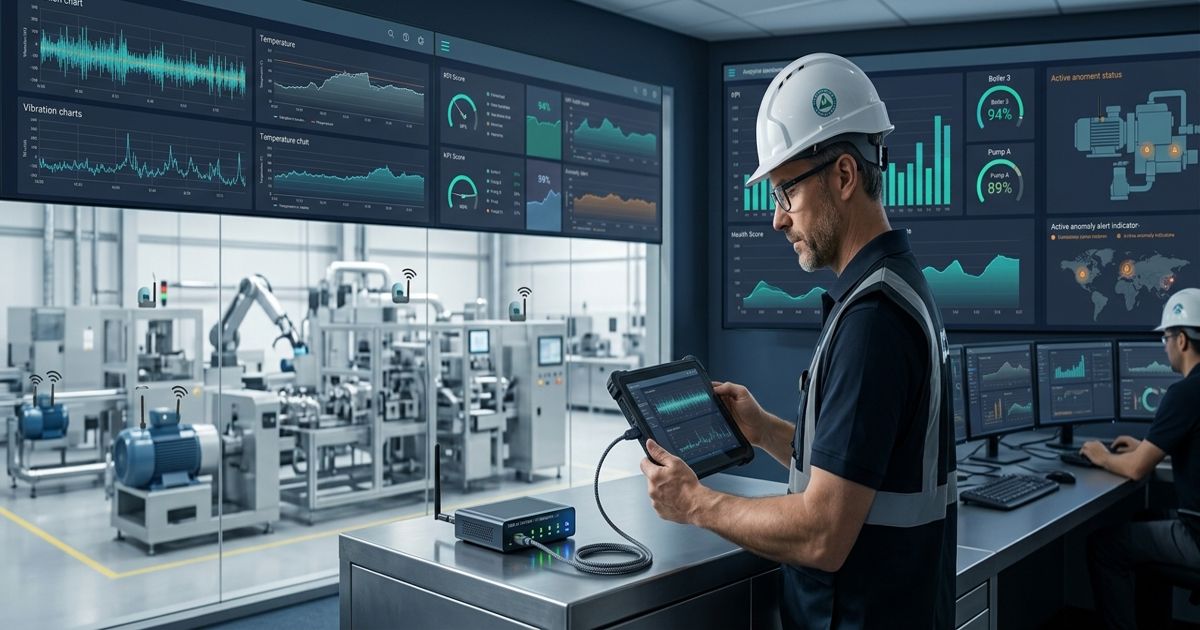
Machine Monitoring Software: Essential for Modern Asset Performance Management
 Author
 Date of Publication
 Category
Machine monitoring software has become indispensable for industrial operations that depend on uptime, efficiency, and equipment reliability. When assets fail unexpectedly, the cost is not just financial. It disrupts production schedules, strains maintenance teams, and puts worker safety at risk. Modern facilities need a smarter way to manage their equipment, and that is exactly what intelligent monitoring platforms deliver.
This blog explores how machine monitoring software works, what capabilities define the best platforms, and how solutions like Merjio by Lanware Solutions are helping industrial teams move from reactive maintenance to AI-driven predictive strategies.
Key Takeaways
- Machine monitoring software enables real-time visibility into equipment health, reducing the risk of unexpected failures and unplanned downtime while supporting AI-driven predictive maintenance strategies.
- A robust condition monitoring system built on edge-to-cloud architecture delivers faster anomaly detection, lower latency, and scalable data management across distributed industrial sites.
- Equipment monitoring software supports smarter maintenance decisions, energy optimization, worker safety, and compliance across complex industrial environments.
What Is Machine Monitoring Software and Why Does It Matter?
At its core, machine monitoring software collects real-time data from industrial equipment, processes it through analytics engines, and surfaces actionable insights to operators and managers. It bridges the gap between physical assets on the shop floor and the digital intelligence needed to manage them efficiently.
Traditional maintenance approaches rely on scheduled inspections or reactive repairs after a fault occurs. Both methods are costly. Scheduled maintenance may service equipment that does not yet need attention, wasting resources. Reactive maintenance arrives too late, after damage is already done. Intelligent equipment monitoring software changes this equation by continuously analyzing asset conditions and alerting teams to deviations before failures occur.
According to research published by McKinsey and Company, predictive maintenance enabled by real-time data can reduce machine downtime by up to 50 percent and extend asset life. These are not theoretical outcomes. They are the direct result of deploying capable monitoring infrastructure.
Core Capabilities of a Modern Condition Monitoring System
A capable condition monitoring system does more than collect sensor data. It integrates AI, edge computing, and cloud infrastructure to deliver a complete picture of asset health across an entire facility or fleet of sites.
Real-Time Data Collection and Anomaly Detection
The first requirement of any effective machine monitoring software is the ability to capture data continuously from connected assets. Temperature, vibration, pressure, and energy consumption all serve as signals. A well-designed condition monitoring system processes these signals in real time and uses AI to distinguish between normal operational variations and patterns that indicate a developing fault.
Merjio, the AI-powered Industrial IoT platform from Lanware Solutions, does exactly this. Its anomaly detection layer automatically identifies unusual patterns in operations and sends alerts to facility managers before issues escalate. The AI is designed to separate routine fluctuations from conditions that require immediate attention, reducing false alarms while ensuring genuine threats are never missed.
Edge-to-Cloud Architecture for Faster Decisions
Latency is a critical factor in industrial monitoring. When a sensor detects an anomaly in a high-speed manufacturing line, the system needs to respond in milliseconds, not seconds. This is why leading equipment monitoring software platforms rely on edge-to-cloud architecture rather than sending all data to a central server for processing.
Merjio processes real-time device inference at the edge, right at the source of data generation, while simultaneously sending aggregated data to the cloud for deeper AI analytics and reporting. This dual-layer architecture ensures that time-critical decisions happen locally and that long-term performance trends are captured centrally. Learn more about how Merjio serves smart factory environments with this approach.
Predictive Maintenance Powered by AI
Moving from scheduled preventive maintenance to AI-driven predictive maintenance is one of the most impactful shifts an industrial operation can make. Machine monitoring software with built-in AI can analyze historical asset behavior, identify degradation patterns, and forecast when a component is likely to fail.
This allows maintenance teams to schedule interventions at precisely the right time. Not too early, which wastes resources, and not too late, which causes failures. Merjio supports this shift directly, enabling organizations to transition away from calendar-based maintenance programs toward data-driven decisions rooted in actual equipment condition. For more context on how smart automation strategies support this, explore the smart plant monitoring and automation complete guide.
Centralized Device and Asset Management
Industrial operations rarely involve a single machine or a single site. Managing dozens or hundreds of connected assets across multiple locations requires a centralized management layer. Effective equipment monitoring software provides a single dashboard where operators can view all assets, track their status, receive alerts, and initiate control actions remotely.
Merjio includes centralized device management as a core capability, designed to scale across multiple assets and customer environments. This is particularly valuable for organizations managing distributed operations such as manufacturing plants, water treatment facilities, or mining sites. Explore how Merjio supports IIoT deployments in mining operations as an example of this scalability in action.
How Machine Monitoring Software Supports Industry 5.0 Goals
The conversation around industrial technology has shifted from pure automation to human-centric, sustainable, and resilient operations. Industry 5.0 places workers, sustainability, and adaptability at the center of manufacturing strategy. Machine monitoring software plays a direct role in enabling these outcomes.
- Worker safety: Real-time alerts from a condition monitoring system help prevent equipment-related accidents by warning operators before a hazardous condition develops.
- Energy optimization: Monitoring energy consumption at the asset level enables facilities to identify inefficiencies and reduce waste, contributing to sustainability targets.
- Human-machine collaboration: AI-driven platforms provide guidance to operators rather than replacing them, supporting informed and confident decision-making on the plant floor.
- Traceability and compliance: Integrated reporting tools within equipment monitoring software create audit trails for regulatory compliance and quality assurance.
- Resilience through early warning: Predictive alerts and anomaly detection ensure that operations can absorb disruptions and recover quickly, rather than being blindsided by sudden failures.
Merjio is designed with Industry 5.0 alignment in mind. Its architecture supports these goals through a combination of edge AI, cloud analytics, and a platform philosophy built on simplicity, scalability, and security.
Choosing the Right Machine Monitoring Software for Your Operations
Not all machine monitoring software platforms are equal. When evaluating options, industrial teams should consider several factors to ensure the platform matches both current needs and future growth.
Scalability Across Sites and Asset Types
A platform that works well for one site must also scale cleanly to ten or a hundred. Look for solutions that support centralized management of diverse asset types, offer flexible deployment options, and maintain performance as device counts grow. Merjio is built for this kind of scalability, supporting multiple devices and customer environments within a single centralized architecture.
AI and Analytics Depth
Surface-level dashboards are not enough. The most effective condition monitoring system solutions apply machine learning to distinguish meaningful signals from operational noise, forecast failures, and generate operational insights over time. Ask vendors whether their AI engine is trained on industrial data, how it handles edge cases, and how its predictions are validated.
Integration and Openness
Industrial environments are complex, with existing sensors, control systems, and data pipelines already in place. A capable equipment monitoring software platform must integrate cleanly into this environment. Review the technology stack and API capabilities of any platform you evaluate. Merjio is built on a modern technology stack including AWS, Azure, Spring Boot, React, and Python, making it well-suited for integration into existing industrial IT and OT environments.
For organizations exploring broader digital transformation strategies, IDC research consistently highlights integration capability as one of the top differentiators between successful and unsuccessful IIoT deployments.
Conclusion: Build a Smarter Maintenance Strategy with Machine Monitoring Software
Machine monitoring software is no longer a luxury for large enterprises. It is a practical necessity for any industrial operation that values uptime, efficiency, and cost control. A well-implemented condition monitoring system delivers real-time visibility, AI-driven anomaly detection, and the predictive intelligence needed to shift maintenance from reactive to proactive.
Platforms like Merjio by Lanware Solutions bring together edge computing, cloud AI, centralized asset management, and integrated reporting into a single, scalable solution. Whether your operations span a single facility or multiple sites across industries, the right equipment monitoring software gives your team the insight and control needed to perform at their best. To understand how Lanware approaches building solutions like this, visit the Lanware Solutions approach page and take the next step toward smarter asset performance management.
Frequently Asked Questions
What is machine monitoring software used for in industrial settings?
Machine monitoring software is used to collect real-time data from industrial equipment, detect anomalies, and support predictive maintenance decisions. It helps plant managers maintain uptime, optimize energy use, and reduce unplanned failures across connected assets and facilities.
How does a condition monitoring system differ from traditional maintenance?
A condition monitoring system continuously analyzes asset health data rather than relying on fixed inspection schedules. This approach identifies actual degradation patterns, allowing maintenance teams to intervene only when needed, which reduces both costs and unnecessary downtime compared to calendar-based programs.
What types of industries benefit most from equipment monitoring software?
Equipment monitoring software delivers strong value in manufacturing, mining, water treatment, maritime, and telecommunications. Any industry managing large volumes of distributed assets benefits from real-time visibility, centralized control, and AI-driven alerts that prevent costly equipment failures before they occur.
How does AI improve the accuracy of machine monitoring software?
AI analyzes patterns across large datasets to distinguish between normal operational variations and early fault indicators. In platforms like Merjio, the AI layer automatically identifies anomalies and alerts facility managers, reducing false alarms while ensuring that critical conditions are flagged promptly and accurately.
What is edge-to-cloud architecture in the context of industrial monitoring?
Edge-to-cloud architecture means that initial data processing happens locally at the asset level, ensuring low-latency responses. Aggregated data is then sent to the cloud for deeper AI analysis and reporting. This design is central to how Merjio supports smart factory IIoT use cases effectively.
Can machine monitoring software support operations across multiple sites?
Yes. Modern machine monitoring software platforms are built for multi-site scalability. Centralized device management dashboards allow operators to monitor and control assets across geographically distributed locations from a single interface, making them ideal for large industrial enterprises managing fleets of equipment.
How does equipment monitoring software contribute to worker safety?
By delivering real-time alerts when equipment behaves abnormally, equipment monitoring software gives operators advance warning before hazardous conditions develop. This is particularly aligned with Industry 5.0 safety goals. Exploring smart factory automation solutions reveals how safety and monitoring intersect in practice.
What data does a condition monitoring system typically collect?
A condition monitoring system typically collects vibration, temperature, pressure, energy consumption, and operational cycle data from connected sensors. This data is processed in real time to build a continuous picture of asset health, enabling faster and more informed maintenance and control decisions.
Is predictive maintenance more cost-effective than preventive maintenance?
Predictive maintenance is generally more cost-effective because it targets interventions based on actual asset condition rather than fixed schedules. This reduces unnecessary maintenance labor and parts consumption while preventing the much higher costs associated with unplanned failures and emergency repairs in industrial environments.
How do I know if my facility is ready to deploy machine monitoring software?
Readiness depends on having connected or connectable assets, a team open to data-driven maintenance decisions, and a clear understanding of your operational pain points. Reaching out to the Lanware Solutions team is a practical first step to assess fit and explore deployment options for your environment.
Related product
Merjio IIoT Platform by Lanware
Any sensor. Any industry. One unified data layer — explore SKID solutions, AI-driven analytics, and live monitoring on the Merjio platform.
Explore merjio.com