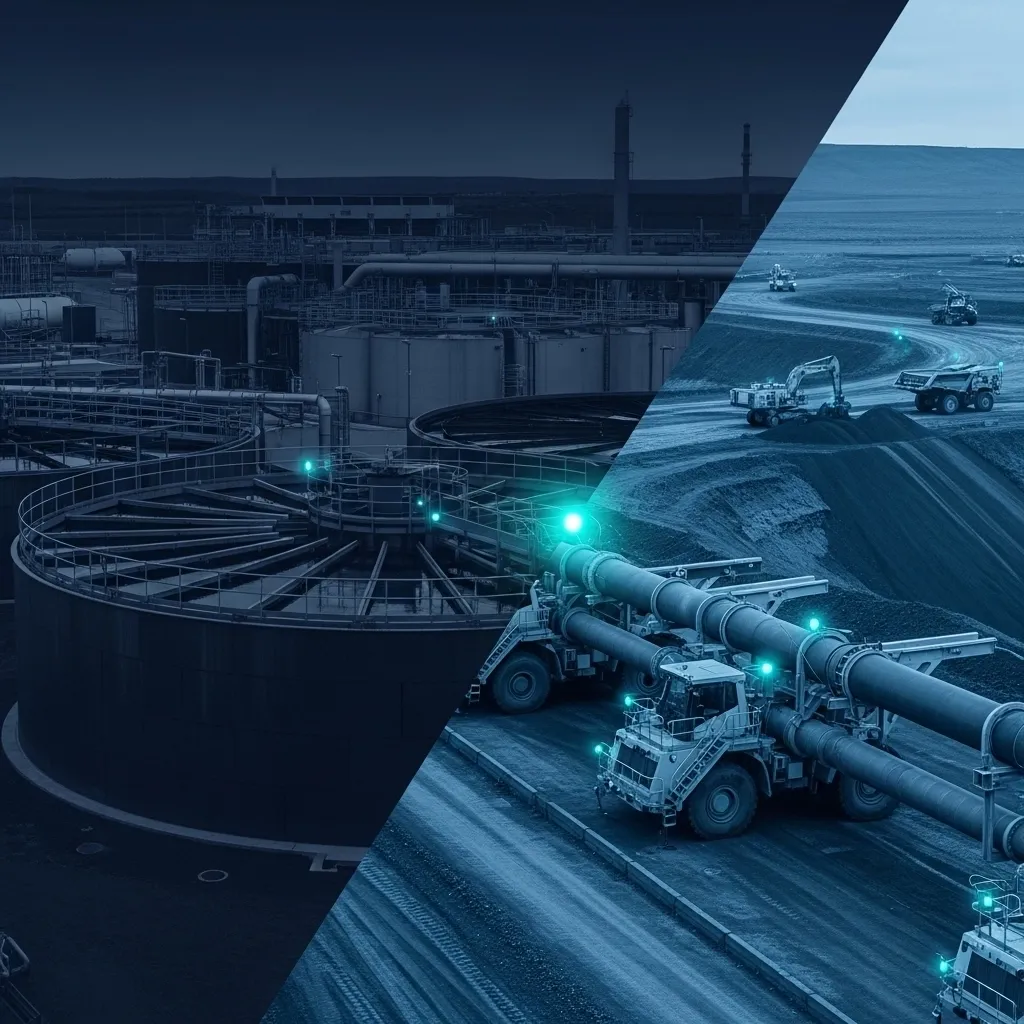
Merjio: Edge AI Built for Water Treatment and Mining Sites
 Author
 Date of Publication
 Category
Introduction
Water & wastewater treatment plants and mining operations run on complex skid-based equipment and a single pump failure can trigger hours of costly downtime. Merjio, Lanware Solutions' asset monitoring platform, gives operations teams the real-time visibility they need before failures happen. Powered by edge computing and generative AI, Merjio is purpose-built for industries where uptime is non-negotiable. This blog explores how Merjio addresses the monitoring and predictive maintenance needs of water treatment and mining environments.
Key Takeaways
Merjio uses edge computing and generative AI to track skid-based assets in real time across water, wastewater, and mining environments.
- Industries with distributed equipment including STP/ETP skids, slurry pumping skids, and sludge dewatering skids benefit directly from Merjio's predictive maintenance capabilities.
Merjio reduces unplanned downtime by delivering actionable health alerts and asset intelligence directly to operations teams across multiple sites.
Why Skid Equipment in Water and Mining Demands Smarter Monitoring
Unmonitored skid equipment in water treatment and mining sites leads to costly, avoidable failures that can interrupt operations for hours or even days.
Industries like Water & Wastewater / Sewage Treatment and mining depend on skid-mounted systems that run continuously. These skids include pumps, motors, blowers, and compressors, each of which can fail without warning if left unmonitored. In a water treatment plant, an undetected fault in a chemical dosing skid can compromise water quality and compliance standards. In mining, a failed slurry pumping skid can halt an entire extraction line. According to research from McKinsey & Company, unplanned downtime costs manufacturers an estimated $50 billion per year globally. Skid-heavy industries bear a disproportionate share of that risk. Traditional manual inspections and reactive maintenance models no longer offer adequate protection. Operations teams need continuous, data-driven visibility into every asset across every site.
Common skid types at risk across these environments include:
STP and ETP process skids
- MBBR, MBR, and SBR biological treatment skids
- Chemical dosing and RO/UF/ZLD skids
- Sludge dewatering skids
- Slurry pumping and dewatering skids in mining
Flotation, thickener, and reagent dosing skids
How Merjio Supports Water & Wastewater Treatment Operations
Merjio gives water and wastewater treatment plants a connected, intelligent layer over their skid equipment, enabling smarter operations and faster issue resolution across every critical process unit.
Water & Wastewater / Sewage Treatment plants operate a wide range of mission-critical skid systems, from STP and ETP process skids and biological treatment units to water tank disinfection systems and RO/UF/ZLD filtration rigs. Each of these assets must perform consistently to meet environmental compliance standards. Merjio's asset monitoring platform connects directly to pumps, motors, and control units on these skids. It captures operational data at the edge and applies generative AI to flag anomalies before they escalate into failures. For instance, a chemical dosing skid showing irregular pressure fluctuations can trigger a maintenance alert days before a complete breakdown occurs. Plant operators receive real-time dashboards and automated health summaries, reducing their dependence on physical inspections and enabling faster corrective action. According to the U.S. Environmental Protection Agency, effective monitoring of wastewater infrastructure is a key pillar of sustainable operations, a standard Merjio directly supports.
Key skids Merjio supports in water & wastewater operations:
STP / ETP process skids
- MBBR, MBR, SBR biological treatment skids
- Sludge dewatering skids
- RO / UF / ZLD filtration skids
- Chemical dosing skids
Water tank disinfection monitoring systems
Slurry Pumping Skids and Sludge Dewatering in Mining Environments
In harsh mining and metals environments, Merjio enables remote monitoring of slurry pumping skids and sludge dewatering systems where manual inspection is physically impractical.
Mining, metals, and cement operations rely on heavy-duty skid equipment deployed across remote and challenging terrain. Slurry pumping skids move abrasive materials through processing lines under constant mechanical stress. Dewatering skids manage excess water from extraction and ore processing sites. Reagent dosing and flotation skids are central to mineral recovery. These systems run continuously with very little tolerance for failure. Merjio's IoT-based monitoring capabilities are engineered for exactly these conditions. Sensors connected to motors, pumps, and blowers feed live data into Merjio's edge computing layer, which processes it locally for immediate response even in areas with limited network connectivity. This means operations teams managing a remote mining site can monitor every asset's health from a central dashboard without needing on-site personnel stationed at every skid point. When a sludge dewatering skid motor begins showing signs of bearing wear or abnormal vibration, Merjio alerts the maintenance team in advance — preventing the kind of catastrophic failure that floods a site or shuts down production.
Typical mining skid types supported by Merjio:
Slurry pumping skids
- Dewatering skids
- Reagent dosing skids
- Flotation and thickener skids
Mobile water treatment skids
Predictive Maintenance Powered by Edge AI and Generative Intelligence
Merjio combines edge computing with generative AI to move operations teams from reactive emergency repairs toward a proactive, data-informed maintenance strategy.
Traditional maintenance relies on scheduled servicing intervals or responding to visible failures after the fact. Merjio changes this model entirely. Its asset monitoring platform processes sensor data locally at the edge, reducing latency and enabling real-time responses even in connectivity-constrained industrial environments. AI-driven analytics analyze patterns across vibration, temperature, pressure, and flow data to build a predictive model for each individual asset. When a sludge dewatering skid motor begins exhibiting early signs of bearing degradation, Merjio flags the issue days or weeks before a failure occurs. Maintenance teams can then schedule repairs during planned downtime rather than scrambling during an operational crisis. Over time, this predictive approach lowers maintenance costs significantly and extends the operational lifespan of expensive skid equipment delivering measurable value across both water treatment and mining environments.
Real-Time Asset Visibility Across Distributed Operations
Merjio provides a unified view of all skid-based assets across multiple sites, giving operations leaders the oversight they need to manage distributed equipment confidently and at scale.
Water treatment and mining operations frequently span multiple locations decentralized treatment plants, remote mine sites, or distributed processing facilities. Managing asset health across all these points is a significant challenge without the right technology in place. Merjio's platform aggregates data from every connected asset into a single, accessible operations dashboard. Managers can monitor the health status of every pump, blower, and compressor across all sites simultaneously. This unified visibility supports better resource allocation, faster maintenance decisions, and more effective planning during shutdowns or inspections. Organizations exploring Lanware's full suite of technology products will find that Merjio is designed from the ground up for industries where continuous uptime is a business-critical requirement. Whether managing a network of sewage treatment plants or a fleet of mobile mining skids across multiple regions, Merjio delivers the asset intelligence needed to keep operations moving without interruption.
Conclusion
Water & wastewater treatment and mining operations cannot afford unplanned downtime. Skid-based systems including slurry pumping skids, sludge dewatering skids, STP/ETP units, and water tank disinfection systems are too critical to manage without real-time data and predictive insight. Merjio brings together edge computing, generative AI, and asset monitoring to give operations teams the visibility and intelligence they need to act before failures occur. If your business manages distributed skid equipment and wants to reduce unplanned downtime, contact Lanware Solutions to explore how Merjio can transform your asset management operations.
Frequently Asked Questions
1. What is Merjio and what does it do?
Merjio is an asset monitoring platform developed by Lanware Solutions. It uses edge computing and generative AI to deliver real-time asset visibility and predictive maintenance for skid-based industrial equipment in sectors like water & wastewater treatment and mining.
2. How does Merjio support water & wastewater treatment plants?
Merjio connects to pumps, motors, and control systems on STP/ETP skids, MBBR/MBR/SBR treatment units, and water tank disinfection systems. It monitors asset health continuously and sends alerts before equipment faults affect water quality or operational compliance.
3. Can Merjio monitor slurry pumping skids in remote mining sites?
Yes. Merjio is built for harsh, remote environments. Its edge computing layer processes sensor data locally, enabling real-time monitoring of slurry pumping skids and dewatering skids without depending on stable IoT network connectivity at the site.
4. What types of skid equipment does Merjio track?
Merjio tracks a wide range of skid-mounted assets, including STP/ETP skids, sludge dewatering skids, slurry pumping skids, chemical dosing skids, RO/UF/ZLD skids, flotation skids, and mobile water treatment units used across industrial operations.
5. How does Merjio use generative AI for asset management?
Merjio's generative AI analyzes sensor data including temperature, vibration, and pressure to detect early signs of equipment degradation. It builds predictive models for each asset and flags anomalies before they lead to unplanned failures or costly production stoppages.
6. What industries benefit most from Merjio?
Merjio is most valuable in industries with distributed skid-based equipment, including Water & Wastewater / Sewage Treatment, mining, metals, cement, and oil & gas. These sectors rely heavily on continuous equipment uptime and face high costs from unplanned downtime events.
7. How is Merjio different from traditional asset monitoring systems?
Unlike traditional monitoring tools, Merjio combines edge computing with generative AI to deliver predictive intelligence, not just reactive alerts. It processes data locally at the edge, enabling faster response times and real-time anomaly detection across all connected skid equipment.
8. Does Merjio work for sludge dewatering skid operations?
Yes. Merjio is well-suited for sludge dewatering skid monitoring. It tracks motors, blowers, and pumps on dewatering units in real time and delivers predictive alerts to maintenance teams, helping prevent failures that could interrupt sludge management and treatment processes.
9. Can Merjio manage assets across multiple plant locations?
Yes. Merjio aggregates data analytics from assets across multiple sites into one unified dashboard. Operations teams can monitor equipment health at every plant or mining site from a central interface, making multi-location asset management more efficient.
10. How can I get started with Merjio for my operations?
Contact Lanware Solutions to speak with a specialist about deploying Merjio for your water treatment or mining environment. The team can help assess your skid equipment profile and recommend the right implementation approach for your operations.
Related product
Merjio IIoT Platform by Lanware
Any sensor. Any industry. One unified data layer — explore SKID solutions, AI-driven analytics, and live monitoring on the Merjio platform.
Explore merjio.com