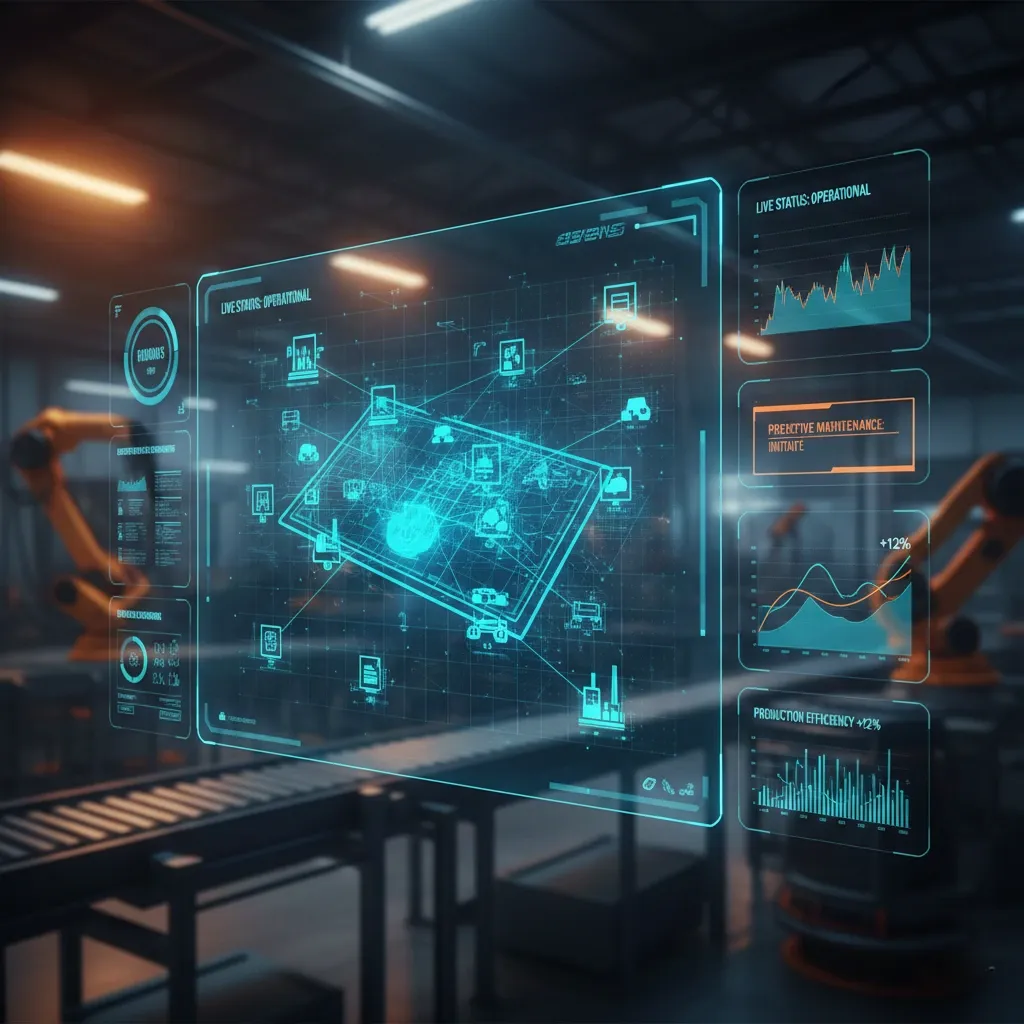
How Merjio Revolutionizes Industrial Asset Management
 Author
 Date of Publication
 Category
Managing industrial assets across multiple locations has always been challenging for businesses. Merjio addresses this challenge head on by combining edge computing with predictive maintenance and agentic AI to deliver complete asset visibility. This industrial IoT platform empowers organizations to track equipment, predict maintenance needs, and optimize operations in real time. Whether you manage manufacturing facilities, maritime operations, or distributed infrastructure, understanding how Merjio works can transform your approach to asset management.
Key Takeaways
Merjio leverages edge computing and AI to provide real-time asset tracking and predictive maintenance capabilities across industrial operations.
- The platform delivers actionable insights that reduce downtime, extend equipment lifespan, and improve operational efficiency for manufacturing and enterprise environments.
Industrial IoT solutions like Merjio integrate seamlessly with existing systems, enabling businesses to modernize their asset management without disrupting current workflows.
Understanding Merjio's Core Technology Stack
Merjio combines edge computing with AI to create a powerful industrial IoT platform. The system processes data locally at the edge, reducing latency and enabling real-time decision making. This architecture ensures that critical asset information remains available even when cloud connectivity is limited.
The platform uses AI to analyze patterns in asset performance and predict potential failures before they occur. By processing sensor data, maintenance logs, and operational metrics, Merjio identifies anomalies that human operators might miss. This proactive approach to asset management helps businesses avoid costly unplanned downtime. The IoT infrastructure supports various sensors and devices, making it adaptable to different industrial environments. Edge processing also enhances data security by keeping sensitive operational information within your network perimeter.
Complete Asset Visibility Across Your Operations
Asset tracking remains one of the biggest operational challenges for businesses with distributed infrastructure. Merjio provides 360-degree visibility into every asset's location, condition, and performance status. The platform creates a unified view that brings together data from multiple sources and locations.
Real-time monitoring capabilities let you track assets as they move through your facilities or supply chain. You can see exactly where equipment is located, how it's being used, and whether it's operating within normal parameters. This level of visibility helps operations teams make better decisions about resource allocation and deployment. Manufacturing operations particularly benefit from this comprehensive tracking, as it enables better coordination between production lines and maintenance teams. The Merjio dashboard interface presents complex data in an intuitive format, making it easy for stakeholders at all levels to understand asset status and take appropriate action.
Predictive Maintenance That Actually Works
Traditional maintenance schedules follow fixed intervals that don't account for actual equipment condition. Merjio changes this approach by using predictive analytics to determine when maintenance is truly needed. The system continuously monitors asset health indicators and uses machine learning models to forecast potential issues.
This data-driven approach to maintenance planning reduces unnecessary service interventions while preventing unexpected failures. You only perform maintenance when equipment actually needs it, based on real operational data rather than arbitrary time periods. According to industry research, predictive maintenance can reduce maintenance costs by 20 to 30 percent while increasing equipment uptime by 10 to 15 percent. The platform sends automated alerts when it detects conditions that warrant attention, giving your team time to plan maintenance activities without disrupting production. Merjio's centralized monitoring capabilities enable consistent maintenance standards throughout your organization, regardless of how many sites you operate.
Seamless Integration with Existing Systems
Implementing new technology shouldn't require replacing your entire infrastructure. Merjio is designed to work alongside your current systems and processes. The platform supports standard industrial protocols and can connect to most enterprise resource planning systems, manufacturing execution systems, and other business applications.
Integration capabilities ensure that asset data flows smoothly between Merjio and your other operational tools. This interoperability eliminates data silos and creates a more cohesive technology ecosystem. Your teams can access asset information directly within the tools they already use, reducing the learning curve and improving adoption. The platform's API enables custom integrations tailored to your specific business requirements. Lanware Solutions provides comprehensive support to ensure that hardware components work reliably within the broader system architecture.
Real World Applications and Business Impact
Organizations across various industries are using industrial IoT solutions to transform their operations. In manufacturing environments, Merjio helps reduce production line downtime by identifying equipment issues before they cause stoppages. Water and wastewater treatment facilities use the platform to monitor system performance and prevent failures, while mining operators use it to track equipment health and improve operational efficiency.
The business impact extends beyond maintenance and tracking. Better asset visibility leads to improved capacity planning and more efficient resource utilization. Companies report significant reductions in emergency maintenance costs and unplanned downtime. Energy consumption often decreases as the system identifies inefficient equipment operations and usage patterns. The platform's analytics capabilities also support strategic decision making about asset replacement, upgrades, and expansion. For example, Accenture research indicates that industrial IoT implementations can increase productivity by up to 30 percent while reducing operational costs by 25 percent. These improvements directly impact your bottom line by reducing waste and maximizing the return on your equipment investments.
Getting Started with Merjio Implementation
Deploying an industrial IoT platform requires careful planning and execution. The implementation process begins with assessing your current asset management practices and identifying specific pain points you want to address. This analysis helps determine which assets should be connected first, what data points matter most for your operations, and whether existing hardware is sufficient or if custom hardware solutions are required for effective monitoring.
Hardware installation comes next, involving sensors, edge computing devices, and network infrastructure. The modular architecture allows for phased rollouts, so you can start with a pilot program in one facility before expanding across your organization. Training your team on the new system ensures they understand how to interpret data and respond to alerts effectively. Ongoing support and system optimization continue after initial deployment, with regular updates that introduce new features and improvements. Working with experienced technology partners who understand both industrial IoT platforms and your specific industry requirements makes the transition smoother and more successful.
Conclusion
Merjio represents a significant advancement in how businesses approach industrial asset management. The platform combines edge computing, AI, and comprehensive tracking capabilities to deliver real-time visibility and predictive insights. Organizations that implement industrial IoT solutions like Merjio gain competitive advantages through reduced downtime, lower maintenance costs, and better operational efficiency. As industrial operations become increasingly complex and distributed, having a robust asset tracking platform becomes essential for maintaining competitiveness. Ready to transform your asset management strategy? Contact Lanware Solutions to learn how Merjio can be customized for your specific operational needs.
Frequently Asked Questions
What is Merjio and how does it work?
Merjio is an industrial IoT platform that uses edge computing and AI to provide real-time asset tracking and predictive maintenance. The system collects data from sensors, and delivers actionable insights through an intuitive dashboard interface.
Which industries can benefit from using Merjio?
Merjio serves various industries, with a strong focus on water and wastewater treatment and mining, along with manufacturing, healthcare facilities, telecommunications infrastructure, and any business managing distributed physical assets. The platform adapts to industry-specific requirements and regulatory needs.
How does Merjio improve predictive maintenance accuracy?
The platform analyzes historical performance data, sensor readings, and operational patterns using machine learning algorithms. This approach identifies early warning signs of equipment degradation, enabling maintenance teams to address issues before failures occur and optimize service schedules.
Can Merjio integrate with our existing enterprise systems?
Yes, Merjio supports standard industrial protocols and provides APIs for custom integrations. The platform connects with ERP systems, manufacturing execution systems, and other business applications to create a unified operational ecosystem.
What are the key differences between traditional asset tracking and Merjio?
Traditional methods rely on manual inspections and fixed maintenance schedules. Merjio provides continuous automated monitoring, real-time visibility, and data-driven predictions. This approach reduces human error and enables proactive rather than reactive asset management.
How long does Merjio implementation typically take?
Implementation timelines vary based on facility size, number of assets, and integration complexity. An MVP typically takes 3-6 months to implement, while full-scale implementations take about 6-12 months, depending on the complexity of integration with existing systems.
What hardware requirements does Merjio have?
The platform requires edge computing devices, industrial sensors, and network connectivity. Specific hardware depends on your asset types and monitoring needs. The system supports various sensor types and can work with existing hardware infrastructure in many cases. Learn more about Merjio specifications.
How does Merjio handle data security and privacy?
The platform includes encryption, access controls, and audit logging features. Merjio's architecture follows industry security standards and compliance requirements for data protection, ensuring your operational data remains secure.
What kind of ROI can businesses expect from Merjio?
Organizations typically see reduced maintenance costs, decreased downtime, and improved asset utilization. Many businesses report 20 to 30 percent maintenance cost reductions and 10 to 20 percent increases in equipment uptime within the first year of implementation.
Does Merjio require specialized technical expertise to operate?
The platform features an intuitive interface designed for operations teams without extensive technical backgrounds. Initial training ensures users understand the system, and ongoing support helps teams maximize platform capabilities. Contact us to learn about available support and training options for complex configurations.
Related product
Merjio IIoT Platform by Lanware
Any sensor. Any industry. One unified data layer — explore SKID solutions, AI-driven analytics, and live monitoring on the Merjio platform.
Explore merjio.com